Many people assume migraines begin in the head.
But for a large number of patients, migraine pain actually starts in the neck and travels forward.
Understanding this connection often changes how people think about their symptoms and why treatments that focus only on the head sometimes fall short.
The Neck–Head Connection
The muscles at the front, sides, and base of the neck are closely connected to the nerves and blood flow that influence the head and face.
When these muscles become tight or irritated, they can refer pain into other areas.
That means the source of pain may be somewhere different from where it is felt.
Common referral patterns include:
• Pain behind the eyes
• Forehead pressure
• Temple headaches
• Pain at the base of the skull
• One-sided migraine symptoms
• Headaches that begin after work or long periods of concentration
Many patients are surprised to learn that a tight neck muscle can create pain that feels exactly like a migraine.
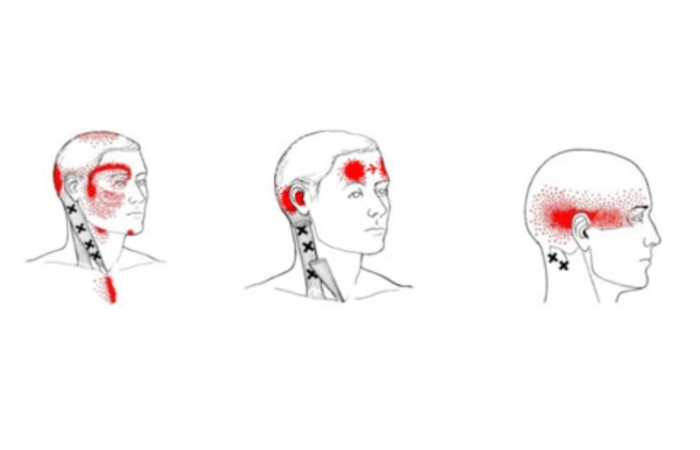
Common neck muscles that can refer pain into the head and contribute to migraines
Why Neck Tension Happens
Modern life places constant demand on the neck and shoulders.
Some of the most common contributors include:
• Repetitive factory or manual work
• Old injuries such as car accidents or whiplash
• Long hours looking slightly downward
• Stress and jaw clenching
• Poor sleep positioning
• Chronic muscle guarding after past pain
Even injuries from many years ago can leave lingering patterns in the nervous system and muscles.
Over time, the body adapts to tension until headaches or migraines begin to appear more frequently.
Migraines Are Neurological - But Muscles Still Matter
Migraines are complex neurological events. They are not simply muscle tension.
However, muscle tightness in the neck can:
• increase nerve sensitivity
• reduce comfortable blood flow to the head
• keep the nervous system in a heightened “alert” state
• trigger or worsen migraine episodes
For some people, addressing neck tension becomes one of the missing pieces in reducing frequency and intensity.
How Acupuncture Approaches Migraines Differently
Rather than focusing only on where pain is felt, acupuncture looks for the patterns driving it.
Treatment may aim to:
• relax overactive neck muscles
• calm the nervous system
• improve circulation between the neck and head
• reduce sensitivity along headache pathways
• help the body shift out of a stress response
Many patients notice they not only experience fewer headaches, but also:
• improved sleep
• less shoulder tightness
• clearer thinking
• more consistent energy
You can read more about treatment expectations in our article:
How Acupuncture Helps with Migraines and Chronic Headaches
What You Can Try at Home
Between treatments, gentle self-care can support progress:
• Light gua sha along the neck and upper shoulders
• Gentle pressure along tender neck points
• Heat applied to the base of the skull
• Regular posture breaks during work
• Slow nasal breathing to relax neck muscles
These approaches are not replacements for treatment, but they often help reduce buildup of tension.
When Headaches Keep Returning
If headaches or migraines continue to come back despite medication, massage, or stretching, the body may be maintaining a deeper pattern.
Sometimes the question is not:
“What stops the headache?”
but rather:
“Why does my body keep creating it?”
Addressing the neck–head connection is often an important step toward longer-lasting relief.
A Different Way to Think About Migraines
Many patients arrive believing their migraines are unpredictable or something they simply have to live with.
Often, once the underlying patterns begin to change, symptoms become more manageable and less disruptive to daily life.
If you are curious whether acupuncture may help your migraines or chronic headaches, you are welcome to learn more or schedule a visit.

Katrena Haney
Contact Me